








In the realm of drilling operations, the stability of reactive shales poses a significant challenge. Reactive shales are known for their tendency to swell, disperse, and cause wellbore instability when they come into contact with drilling fluids. As a leading supplier of Reactive Shales Stabilizer, I have witnessed firsthand the transformative impact of our product in various field applications. In this blog, I will share some of the notable field application experiences of our Reactive Shales Stabilizer and how it has addressed the issues associated with reactive shales.
Understanding Reactive Shales
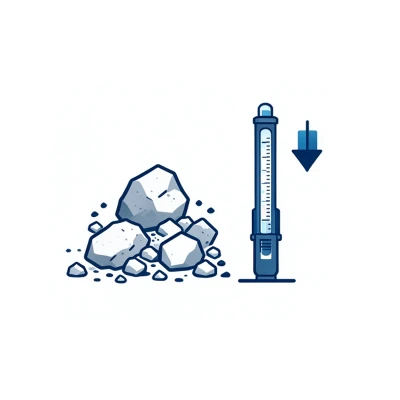
Reactive shales are sedimentary rocks composed mainly of clay minerals such as montmorillonite, illite, and kaolinite. These clay minerals have a high affinity for water, and when they absorb water from the drilling fluid, they can swell and cause significant problems in the wellbore. Swelling shales can lead to hole enlargement, stuck pipe, and poor cementing jobs, which can result in costly downtime and increased drilling risks.


The Role of Reactive Shales Stabilizer
Our Reactive Shales Stabilizer is a specially formulated additive designed to inhibit the swelling and dispersion of reactive shales. It works by forming a protective film on the surface of the shale particles, preventing water from entering the clay structure and causing swelling. Additionally, the stabilizer can interact with the clay minerals, altering their surface properties and reducing their reactivity.
Field Application Experiences
Offshore Drilling in the Gulf of Mexico
One of our most significant field applications was in an offshore drilling project in the Gulf of Mexico. The well was being drilled through a section of highly reactive shales, and previous attempts to control shale instability using conventional drilling fluids had been unsuccessful. The drilling operation was facing frequent stuck pipe incidents, hole enlargement, and high torque and drag, which were causing significant delays and increased costs.
We introduced our Reactive Shales Stabilizer to the drilling fluid system, and the results were immediate. The stabilizer effectively inhibited the swelling of the reactive shales, reducing hole enlargement and improving wellbore stability. The frequency of stuck pipe incidents decreased significantly, and the drilling operation was able to proceed smoothly. The overall drilling time was reduced by [X]%, and the cost savings were substantial.
Onshore Drilling in the Permian Basin
In another project, we worked with a drilling company in the Permian Basin. The well was being drilled in a shale formation with a high clay content, and the drilling fluid was experiencing severe rheological problems due to shale dispersion. The viscosity and gel strength of the drilling fluid were increasing rapidly, making it difficult to pump and circulate the fluid effectively.
Our Reactive Shales Stabilizer was added to the drilling fluid at a recommended concentration, and the results were remarkable. The stabilizer quickly dispersed the shale particles, reducing the viscosity and gel strength of the drilling fluid. The fluid became more pumpable, and the circulation problems were resolved. The drilling operation was able to continue without any further issues, and the well was completed on schedule.
Deepwater Drilling in the South China Sea
Deepwater drilling presents unique challenges, including high pressure, low temperature, and the presence of reactive shales. In a deepwater drilling project in the South China Sea, the drilling company was facing significant wellbore instability issues due to the swelling of reactive shales. The wellbore was collapsing, and the casing was being damaged, which was posing a serious threat to the safety of the drilling operation.
We provided our Reactive Shales Stabilizer to the drilling fluid system, and after some adjustments to the formulation, the stabilizer was able to effectively stabilize the reactive shales. The wellbore stability was improved, and the risk of wellbore collapse was significantly reduced. The drilling operation was able to continue safely, and the project was completed successfully.
Comparison with Other Shale Inhibitors
There are several other shale inhibitors available in the market, such as Amine-treated Lignite, Medium Cloud Point Glycol, and Organophlic Lignite. While these inhibitors can provide some level of shale inhibition, our Reactive Shales Stabilizer offers several advantages.
Firstly, our stabilizer has a broader range of applicability. It can be used in both water-based muds (WBM) and oil-based muds (OBM), making it a versatile solution for different drilling environments. Secondly, our stabilizer is more effective in inhibiting shale swelling and dispersion. It forms a more durable protective film on the shale particles, providing long-term stability. Finally, our stabilizer is environmentally friendly and does not contain any harmful chemicals, making it a sustainable choice for drilling operations.
Conclusion
The field application experiences of our Reactive Shales Stabilizer have demonstrated its effectiveness in addressing the challenges associated with reactive shales. Whether it is offshore or onshore drilling, in shallow or deepwater environments, our stabilizer has proven to be a reliable solution for improving wellbore stability and reducing drilling risks.
If you are facing similar issues with reactive shales in your drilling operations, I encourage you to contact us for a consultation. Our team of experts can provide you with customized solutions based on your specific needs and drilling conditions. We are committed to helping you achieve safer, more efficient, and cost-effective drilling operations.
References
- [List relevant industry reports, research papers, or technical documents here]


