


Hey there! As a supplier of Sulphonated Asphalt, I've been getting a lot of questions lately about whether it can be used in the repair of damaged wellbores. So, I thought I'd take a deep - dive into this topic and share my thoughts and knowledge.

First off, let's understand what a damaged wellbore is. A wellbore can get damaged in various ways during the drilling process. There could be issues like hole enlargement, wellbore instability, or the formation of fractures. These problems can lead to a whole bunch of headaches, such as lost circulation, stuck pipes, and reduced drilling efficiency. And that's where we start to wonder if Sulphonated Asphalt can come to the rescue.
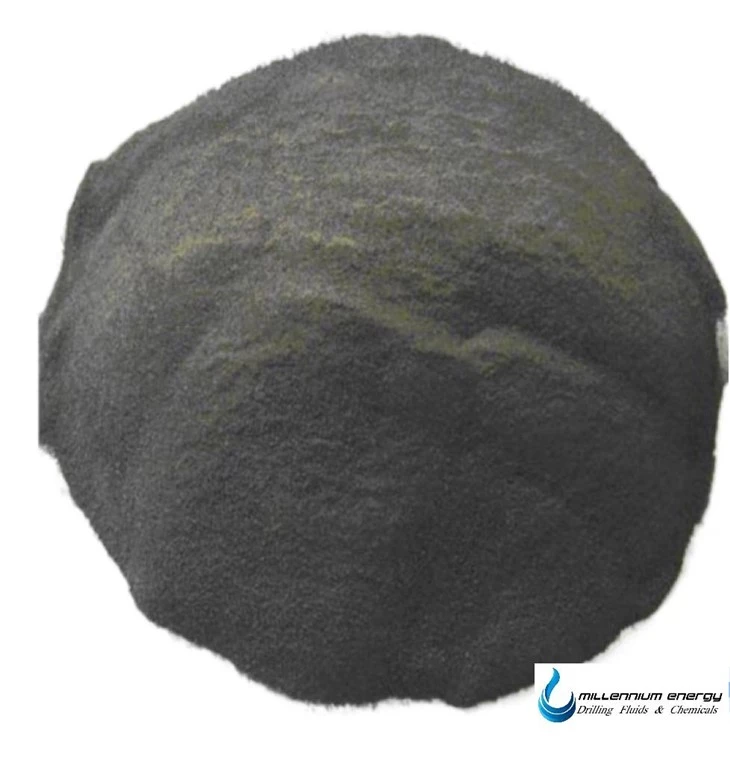
Sulphonated Asphalt is a pretty interesting substance. It's made by treating asphalt with sulphonic acid, which gives it some unique properties. One of the key features of Sulphonated Asphalt is its ability to form a thin, tough film on the wellbore walls. This film acts as a protective barrier, preventing the invasion of drilling fluids into the formation and also helping to maintain the integrity of the wellbore.
When it comes to hole enlargement, Sulphonated Asphalt can be quite effective. The film it forms on the wellbore walls can help to reduce the erosion caused by the flow of drilling fluids. As the drilling fluid moves up and down the wellbore, it can wear away the formation, leading to an enlarged hole. But with the protective film of Sulphonated Asphalt, this erosion is minimized.
Wellbore instability is another major concern. It can be caused by factors like high - pressure differentials between the wellbore and the formation, or the presence of reactive shale formations. Sulphonated Asphalt can help here too. It has shale - inhibiting properties, which means it can prevent the swelling and dispersion of shale particles. Shale swelling is a big problem as it can cause the wellbore to collapse or become restricted. By inhibiting shale swelling, Sulphonated Asphalt helps to keep the wellbore stable.
Now, let's talk about lost circulation. This occurs when drilling fluids flow into the formation instead of circulating back to the surface. It can be a costly problem, both in terms of the lost drilling fluids and the time wasted trying to fix it. Sulphonated Asphalt can act as a filtration loss reducer. When added to the drilling fluid, it helps to seal off the fractures and pores in the formation, reducing the amount of fluid that is lost. You can check out more about our Filtration loss reducer Sulfonated Asphalt on our website.
But it's not just about the direct benefits to the wellbore. Sulphonated Asphalt can also work in conjunction with other drilling fluid additives. For example, it can be used in combination with Organophlic Lignite. Organophlic Lignite is another additive that is used for wellbore stabilization and filtration control. When used together with Sulphonated Asphalt, they can provide enhanced performance. The Organophlic Lignite can help to improve the viscosity and gel strength of the drilling fluid, while Sulphonated Asphalt provides the protective film and shale - inhibiting properties.
Medium Cloud Point Glycol is another additive that can be used in combination with Sulphonated Asphalt. Medium Cloud Point Glycol is known for its anti - freeze and lubricating properties. In cold environments, it can prevent the freezing of drilling fluids, and it also reduces the friction between the drill string and the wellbore walls. When used with Sulphonated Asphalt, it can further improve the overall performance of the drilling fluid system.
However, like any additive, Sulphonated Asphalt also has its limitations. Its effectiveness can depend on a variety of factors, such as the type of formation, the properties of the drilling fluid, and the drilling conditions. In some cases, where the formation has very large fractures or high - permeability zones, Sulphonated Asphalt alone may not be sufficient to completely solve the wellbore problems. In such situations, it may need to be used in combination with other more specialized lost - circulation materials.
Another aspect to consider is the dosage of Sulphonated Asphalt. Using too little may not provide the desired benefits, while using too much can lead to problems like increased viscosity of the drilling fluid, which can affect the pumpability and performance of the drilling operation. So, it's important to carefully determine the right dosage based on the specific wellbore conditions.
In conclusion, Sulphonated Asphalt can definitely be used in the repair of damaged wellbores. It offers a range of benefits, from protecting the wellbore walls to reducing lost circulation and inhibiting shale swelling. It can also be used in combination with other additives to enhance its performance. However, it's important to understand its limitations and use it in the right way.
If you're in the drilling industry and are facing wellbore problems, I'd encourage you to consider Sulphonated Asphalt as a potential solution. We're a reliable supplier of high - quality Sulphonated Asphalt, and we can work with you to determine the best approach for your specific situation. If you're interested in learning more or discussing a potential purchase, don't hesitate to reach out. We're always here to help you find the right drilling fluid additives for your needs.
References
- "Drilling Fluids Technology Handbook" by William C. H. Himes
- "Wellbore Stability Fundamentals" by John P. Harrison


