











Organophilic Lignite for Oil-Based & Synthetic-Based Drilling Fluids
Overview
millennium energy Resinated Lignite is an organophilic lignite filtration control additive produced via targeted organic modification of natural lignite feedstock. It is formulated for invert emulsion, oil-based and synthetic-based drilling fluid systems. The product is supplied as free-flowing black powder, compatible with standard oil-mud additive packages including emulsifiers, wetting agents, viscosifiers and weighting agents. Its uniform particle grading supports rapid wetting and uniform dispersion through conventional rig mixing equipment and mud hoppers, without pre-slurrying or special mixing protocols required on location.
Highlights
• Thermally stable up to 400 °F (204 °C) for sustained HPHT downhole service
• Compatible with all mainstream oil-based and invert emulsion drilling fluid systems
• Free-flowing powder for straightforward, controllable addition via mud hoppers
• Compatible with common oil-phase drilling fluid additives
• Lower environmental impact compared with conventional asphalt filtration agents
• Consistent particle grading delivers repeatable filter-cake performance batch over batch
• Minimal rheology disturbance when applied within recommended dosage ranges
Technical Specifications
|
Parameter |
Unit |
Reference Value |
|
Main Composition |
- |
Chemically modified organophilic lignite |
|
Appearance |
- |
Black free-flowing powder |
|
Uncompacted Bulk Density |
kg/m³ |
700 |
|
Compacted Bulk Density |
kg/m³ |
860 |
|
Specific Gravity |
- |
1.8 |
|
Shelf Life |
months |
12 |
|
Packaging |
- |
25 KG multi-wall paper sack |
How It Works
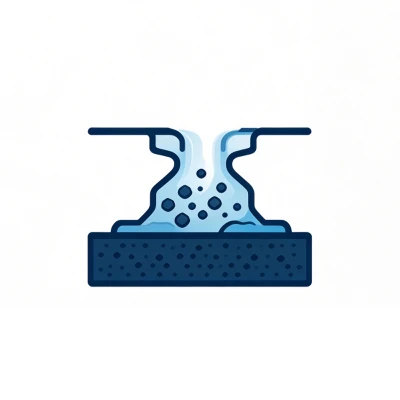
The product is modified through amidation and cross-linking reactions with long-chain organic amines, converting inherently hydrophilic lignite into an oil-dispersible colloidal solid. Aromatic backbones carrying phenolic hydroxyl, carboxyl and methoxy functional groups adsorb at oil-water interfaces, reinforcing the interfacial film surrounding internal water droplets. Under HPHT differential pressure, graded solid particles deposit across the wellbore wall and assemble into a thin, compressible, low-permeability filter cake. This physical barrier plugs formation pores and microfractures to restrict filtrate invasion, working synergistically with the system's primary and secondary emulsifiers.
Applications & Recommended Treatment
Applications
• HPHT fluid loss control for deep and ultra-deep oil-based and synthetic-based drilling fluids
• Filter cake optimisation for permeable formations to reduce differential sticking risk
• Drop-in replacement for asphalt and gilsonite in existing invert emulsion mud programmes
• Filtration control for hostile HPHT intervals including reactive shale and high-pressure pay zones
Recommended Dosage
• BHT below 300 °F: 2–6 ppb
• BHT above 300 °F: 6–20 ppb
Addition Guidance
Introduce millennium energy Resinated Lignite gradually through the mud hopper while tracking HPHT filtrate volume and cake texture. Final application rate must be validated by laboratory pilot testing matched to the project's base oil, mud formulation and downhole temperature profile.
Advantages
• Preserves emulsion integrity under prolonged high-temperature static and dynamic ageing
• Forms deformable filter cake that adapts to fluctuating borehole pressure conditions
• Eliminates the handling hazards associated with raw asphalt and gilsonite alternatives
• Does not negatively alter electrical stability of invert emulsion muds at proper loading
• Supports stable filtration performance over extended circulation times
FAQ
Q1. What pre-job lab work should be completed before field deployment?
A1. Conduct pilot testing using the project's actual mud blend, base oil and additive suite to confirm optimal dosage, fluid loss performance and system compatibility.
Q2. Can this additive be co-mixed with gilsonite or asphalt products?
A2. Co-blending is possible, but separate compatibility testing is mandatory to avoid unintended shifts in emulsion stability and mud rheology.
Q3. What issues arise from over-treatment?
A3. Excessive loading elevates total low-gravity solids content, which may increase plastic viscosity and degrade filter cake quality. Incremental dosing and periodic testing are advised.
Q4. What are the on-site storage requirements?
A4. Store in a cool, dry, ventilated warehouse. Keep packaging sealed from moisture and direct sunlight, and use stock within the 12-month shelf life.
Q5. Are lab-evaluation samples and technical documents available?
A5. Free lab-evaluation samples are available for qualification testing upon business request. Datasheet and SDS documentation can be provided. Contact our sales team for support.
Q6. Where can I view full commercial procurement terms?
A6. Packaging specifications are listed in Technical Specifications. Complete procurement parameters are shown in the Procurement Trust Information table below.
Procurement Trust Information
|
Item |
Content |
|
Sample Policy |
Free lab-evaluation samples for qualification testing; freight cost to be covered by buyer |
|
MOQ Reference |
1 × 20 ft full container for bulk orders |
|
Trial Order |
Trial orders acceptable starting at 250 KG (order quantities negotiable) |
|
Single-Product Output |
Up to 500 metric tons per month |
|
Manufacturing Capability |
Professional manufacturer with bulk-supply capability; flexible OEM service available |
|
Lead-time Reference |
7–14 working days upon receipt of formal order and deposit |
|
Shipping Port |
Qingdao Port, China |
|
Quality Certificates & Reports |
Batch-specific COA and SDS supplied per shipment; third-party laboratory test reports available upon request |
Please contact our sales department for sample application, quotation, formal MOQ confirmation and document delivery.


