


In the oil and gas drilling industry, the interaction between drilling fluids and the wellbore wall is a crucial aspect that significantly impacts the efficiency and safety of the drilling process. Among the various additives used in drilling fluids, sulphonated asphalt has emerged as a notable component. As a sulphonated asphalt supplier, I have witnessed firsthand the diverse effects of this product on different aspects of drilling operations, especially its influence on the adhesion of cuttings to the wellbore wall.
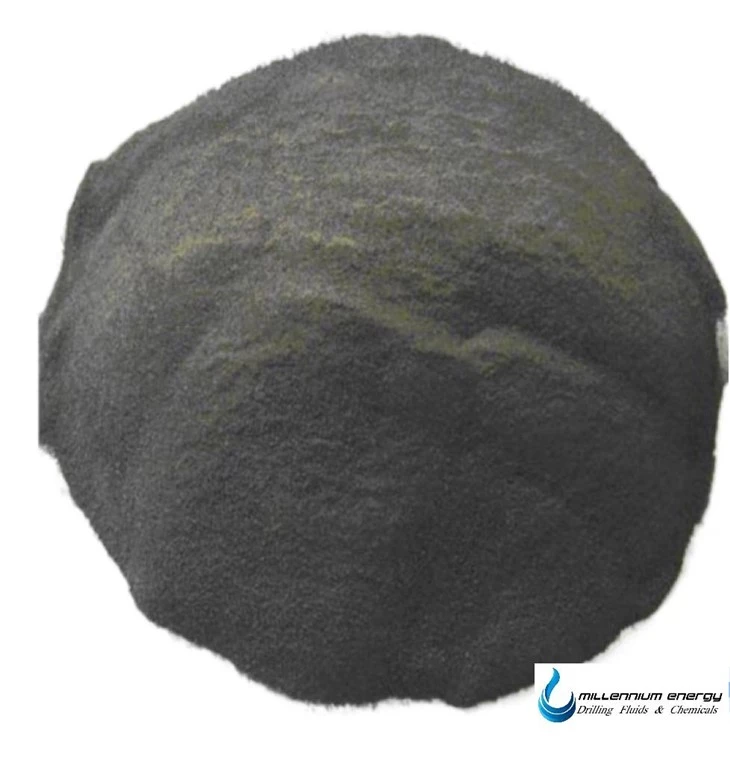

Understanding Sulphonated Asphalt
Sulphonated asphalt is a chemically modified form of asphalt. Through a sulphonation process, asphalt is treated with sulphuric acid or other sulphonating agents, which introduces sulphonic acid groups onto the asphalt molecules. This modification enhances the asphalt's solubility and dispersibility in water - based drilling fluids, making it a valuable additive.
Sulphonated asphalt offers multiple benefits in drilling fluids. It acts as a Filtration loss reducer Sulfonated Asphalt, helping to control the amount of fluid that penetrates into the formation. It also provides lubrication, reducing friction between the drill string and the wellbore wall, and can contribute to wellbore stability. Additionally, Low Fluorescence Anti Collapse Asphalt is another variant that can be used in situations where fluorescence interference needs to be minimized.
Adhesion of Cuttings to the Wellbore Wall: A Problem in Drilling
During the drilling process, the drill bit breaks up the rock formations, generating cuttings. These cuttings need to be efficiently removed from the wellbore to prevent issues such as hole cleaning problems, increased torque and drag, and potential wellbore instability. However, cuttings can adhere to the wellbore wall, creating a layer that can impede the flow of drilling fluids and the movement of the drill string.
The adhesion of cuttings to the wellbore wall is influenced by several factors. The properties of the cuttings themselves, such as their size, shape, and surface charge, play a role. The characteristics of the wellbore wall, including its roughness, mineralogy, and surface energy, also affect the adhesion. Moreover, the composition and properties of the drilling fluid are crucial in determining whether cuttings will stick to the wellbore wall or be carried out of the wellbore.
The Effect of Sulphonated Asphalt on Cuttings Adhesion
Surface Modification of Cuttings and Wellbore Wall
Sulphonated asphalt can adsorb onto the surfaces of both cuttings and the wellbore wall. The sulphonic acid groups on the sulphonated asphalt molecules can interact with the charged surfaces of the cuttings and the wellbore wall through electrostatic forces. This adsorption forms a thin film on the surfaces, which can change their surface properties.
For cuttings, the adsorbed sulphonated asphalt layer can reduce their surface energy. A lower surface energy means that the cuttings are less likely to adhere strongly to the wellbore wall. The film also provides a certain degree of lubrication between the cuttings and the wellbore wall, making it easier for the cuttings to be detached and carried away by the drilling fluid flow.
On the wellbore wall, the sulphonated asphalt film can smooth out the rough surface irregularities. A smoother wellbore wall reduces the contact area between the cuttings and the wall, thereby decreasing the adhesion force. Additionally, the film can act as a barrier, preventing direct contact between the cuttings and the reactive minerals on the wellbore wall, which could otherwise lead to strong adhesion.
Rheological Effects on Drilling Fluids
Sulphonated asphalt can also affect the rheological properties of drilling fluids. Rheology refers to the study of the flow and deformation of materials. In the context of drilling fluids, the rheological properties determine how well the fluid can carry cuttings and how it behaves under different flow conditions.
When sulphonated asphalt is added to the drilling fluid, it can increase the viscosity and yield point of the fluid within an appropriate range. A higher viscosity and yield point mean that the drilling fluid has better suspending ability. The fluid can more effectively carry the cuttings and prevent them from settling and adhering to the wellbore wall. At the same time, the improved rheological properties ensure that the drilling fluid can flow smoothly through the wellbore, facilitating the removal of cuttings.
Inhibition of Swelling and Dispersion
Some types of rock formations, such as shale, are prone to swelling and dispersion when in contact with water - based drilling fluids. Swelling and dispersion can lead to the generation of fine particles that are more likely to adhere to the wellbore wall. Sulphonated asphalt can act as a shale inhibitor.
The sulphonated asphalt molecules can penetrate into the shale pores and block the entry of water. This inhibits the swelling of the shale and reduces the dispersion of shale particles into the drilling fluid. By preventing the formation of fine, sticky particles, sulphonated asphalt helps to reduce the amount of material that can adhere to the wellbore wall.
Case Studies and Experimental Evidence
Numerous laboratory experiments and field case studies have demonstrated the positive effect of sulphonated asphalt on reducing cuttings adhesion. In laboratory tests, researchers have used various techniques to measure the adhesion force between cuttings and wellbore wall samples in the presence and absence of sulphonated asphalt in the drilling fluid. These tests have consistently shown that the addition of sulphonated asphalt can significantly reduce the adhesion force.
In field applications, drilling operations using drilling fluids with sulphonated asphalt have reported fewer problems related to cuttings adhesion. For example, in some wells drilled through shale formations, the use of sulphonated asphalt - containing drilling fluids has resulted in better hole cleaning, lower torque and drag values, and improved overall drilling efficiency.
Considerations and Limitations
While sulphonated asphalt offers many benefits in reducing cuttings adhesion, there are some considerations and limitations. The dosage of sulphonated asphalt needs to be carefully controlled. An excessive amount of sulphonated asphalt can lead to an over - increase in the viscosity of the drilling fluid, which may cause problems such as high pump pressures and poor fluid flow.
The effectiveness of sulphonated asphalt can also be affected by the specific conditions of the well, such as the temperature, pressure, and the composition of the formation. In high - temperature and high - pressure environments, the stability of the sulphonated asphalt may be challenged, and its performance in reducing cuttings adhesion may be compromised.
Conclusion
As a Sulphonated Asphalt supplier, I am confident in the positive impact that sulphonated asphalt can have on the adhesion of cuttings to the wellbore wall. Through surface modification, rheological effects, and inhibition of swelling and dispersion, sulphonated asphalt helps to improve the hole - cleaning efficiency of drilling fluids and reduce the problems associated with cuttings adhesion.
If you are involved in drilling operations and are looking for a reliable solution to reduce cuttings adhesion and improve the performance of your drilling fluids, I encourage you to consider our high - quality sulphonated asphalt products. We are dedicated to providing the best products and technical support to meet your specific drilling needs. Contact us to start a discussion about how our sulphonated asphalt can benefit your projects.
References
- Smith, J. (2018). Drilling Fluids Technology: Principles and Practice. Elsevier.
- Brown, A. (2020). The Role of Additives in Drilling Fluid Optimization. Journal of Petroleum Engineering, 45(2), 123 - 135.
- Green, C. (2019). Rheological Behavior of Drilling Fluids with Sulphonated Asphalt Additives. International Journal of Drilling Technology, 32(3), 78 - 89.


