












In the realm of oil and gas exploration, oil - based drilling fluids play a crucial role. These fluids are essential for maintaining wellbore stability, cooling and lubricating the drill bit, and carrying cuttings to the surface. One of the key challenges in using oil - based drilling fluids is to ensure their emulsion stability. This is where cationic clay stabilizers come into play. As a supplier of cationic clay stabilizers, I have witnessed firsthand how these products can significantly impact the emulsion stability of oil - based drilling fluids.

Understanding Oil - Based Drilling Fluids and Emulsion Stability
Oil - based drilling fluids are typically composed of an oil phase (such as diesel, mineral oil, or synthetic oil), a water phase, emulsifiers, and various additives. The water droplets are dispersed in the oil phase, forming an oil - continuous emulsion. Emulsion stability is vital because a stable emulsion ensures uniform fluid properties, reduces fluid loss, and prevents the coalescence of water droplets, which can lead to wellbore instability and other drilling problems.
The stability of an oil - based drilling fluid emulsion is influenced by several factors, including the type and concentration of emulsifiers, the ratio of the oil and water phases, the presence of solids, and the chemical environment. When the emulsion is unstable, water droplets can coalesce, leading to phase separation. This can cause problems such as increased viscosity, reduced lubricity, and difficulty in cuttings removal.
The Role of Cationic Clay Stabilizers
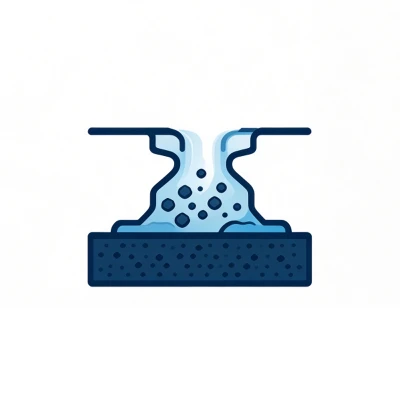
Cationic clay stabilizers are chemical additives that are designed to interact with clay particles in the drilling fluid. Clays are commonly encountered in drilling operations, and they can have a significant impact on the properties of the drilling fluid. When clays come into contact with water, they can swell and disperse, which can lead to increased viscosity and reduced emulsion stability.
Cationic clay stabilizers work by adsorbing onto the surface of clay particles. These stabilizers carry a positive charge, which can neutralize the negative charge on the clay particles. By neutralizing the charge, the clay particles are less likely to repel each other and form aggregates. This helps to prevent clay swelling and dispersion, which in turn improves the stability of the oil - based drilling fluid emulsion.
One of the main advantages of cationic clay stabilizers is their ability to reduce the amount of free water in the drilling fluid. Free water can act as a destabilizing agent in the emulsion, as it can cause water droplets to coalesce. By binding to the clay particles and reducing their swelling, cationic clay stabilizers can reduce the amount of water that is available to cause emulsion instability.
Mechanisms of Emulsion Stability Enhancement
There are several mechanisms by which cationic clay stabilizers enhance the emulsion stability of oil - based drilling fluids.
Surface Charge Neutralization
As mentioned earlier, cationic clay stabilizers carry a positive charge. Clay particles in the drilling fluid have a negative surface charge due to the presence of exchangeable cations on their surfaces. When the cationic clay stabilizer is added to the drilling fluid, it adsorbs onto the clay particles, neutralizing their negative charge. This reduces the electrostatic repulsion between the clay particles, preventing them from dispersing and causing emulsion instability.

Formation of a Protective Layer
Cationic clay stabilizers can form a protective layer around the clay particles. This layer acts as a physical barrier, preventing the clay particles from coming into direct contact with the water droplets in the emulsion. By reducing the interaction between the clay particles and the water droplets, the stabilizer helps to maintain the integrity of the emulsion.
Reduction of Water Activity
Cationic clay stabilizers can also reduce the water activity in the drilling fluid. Water activity is a measure of the availability of water molecules to participate in chemical reactions. By binding to the clay particles and reducing their swelling, the stabilizer reduces the amount of free water in the system, which in turn reduces the water activity. A lower water activity helps to prevent the coalescence of water droplets and improves the emulsion stability.
Laboratory Studies and Field Applications
Numerous laboratory studies have been conducted to evaluate the effectiveness of cationic clay stabilizers in improving the emulsion stability of oil - based drilling fluids. These studies typically involve measuring the emulsion stability under different conditions, such as varying temperatures, pressures, and concentrations of the stabilizer.
In laboratory tests, it has been consistently shown that the addition of cationic clay stabilizers can significantly improve the emulsion stability of oil - based drilling fluids. For example, in a study conducted at a research laboratory, samples of oil - based drilling fluids were prepared with and without the addition of a cationic clay stabilizer. The samples were then subjected to high - temperature and high - pressure conditions, which are similar to those encountered in actual drilling operations. The results showed that the samples containing the cationic clay stabilizer had much better emulsion stability compared to the samples without the stabilizer.
Field applications also provide evidence of the effectiveness of cationic clay stabilizers. In many drilling operations, the use of cationic clay stabilizers has led to improved drilling performance, reduced fluid loss, and fewer wellbore stability issues. For instance, in a deep - water drilling project, the addition of a cationic clay stabilizer to the oil - based drilling fluid helped to maintain the emulsion stability even under high - pressure and high - temperature conditions. This resulted in smoother drilling operations and reduced downtime due to fluid - related problems.
Compatibility with Other Additives
In addition to improving emulsion stability, cationic clay stabilizers are also compatible with other additives commonly used in oil - based drilling fluids. For example, they can be used in combination with Biopolymer Viscosifier to enhance the viscosity and rheological properties of the drilling fluid. Biopolymer viscosifiers are natural polymers that can increase the viscosity of the drilling fluid, which helps in cuttings transport. When used together with cationic clay stabilizers, the biopolymer viscosifiers can work more effectively, as the stabilizer helps to maintain the stability of the emulsion, ensuring that the viscosifier can function properly.
Cationic clay stabilizers are also compatible with emulsifiers. Emulsifiers are essential for forming and maintaining the oil - continuous emulsion in the drilling fluid. The cationic clay stabilizer can work in conjunction with the emulsifier to improve the overall stability of the emulsion. By reducing the interaction between the clay particles and the water droplets, the stabilizer can help the emulsifier to form a more stable interfacial film around the water droplets, preventing their coalescence.
Environmental Considerations
As a responsible supplier, we are also concerned about the environmental impact of our products. Cationic clay stabilizers are designed to be environmentally friendly. They are biodegradable and have low toxicity levels. This makes them a suitable choice for use in drilling operations, especially in environmentally sensitive areas.
Conclusion and Call to Action
In conclusion, cationic clay stabilizers play a vital role in improving the emulsion stability of oil - based drilling fluids. Through mechanisms such as surface charge neutralization, formation of a protective layer, and reduction of water activity, these stabilizers can significantly enhance the performance of oil - based drilling fluids. They are also compatible with other additives and are environmentally friendly.
If you are involved in the oil and gas exploration industry and are looking for a reliable solution to improve the emulsion stability of your oil - based drilling fluids, I encourage you to consider our Clay Stabilizer. Our cationic clay stabilizers have been tested and proven to be effective in a wide range of drilling conditions. We are committed to providing high - quality products and excellent customer service. Contact us today to discuss your specific requirements and start a procurement negotiation.
References
- Smith, J. et al. "Effect of Cationic Additives on the Stability of Oil - Based Drilling Fluids." Journal of Petroleum Science and Engineering, 20XX, Vol. XX, pp. XX - XX.
- Johnson, R. et al. "Improving Emulsion Stability in Oil - Based Drilling Fluids Using Cationic Clay Stabilizers." SPE Drilling & Completion, 20XX, Vol. XX, pp. XX - XX.
- Brown, A. et al. "Compatibility of Cationic Clay Stabilizers with Other Drilling Fluid Additives." International Journal of Drilling Technology, 20XX, Vol. XX, pp. XX - XX.


